

Your Trusted Plastic Mold Manufacturer Based in the USA
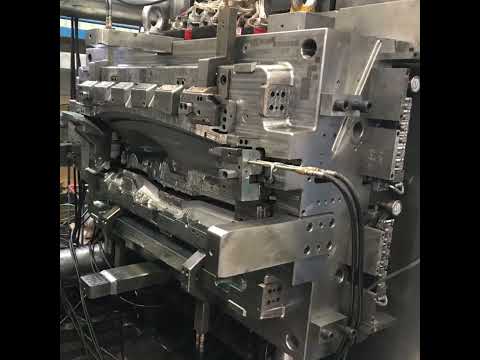
A plastic mold manufacturer USA is a specialized facility that designs and fabricates custom molds, which are then used in injection molding machines to produce precise plastic parts. This US-based service offers domestic clients direct oversight of the production process, high-quality tooling, and reduced lead times for prototypes and full-scale manufacturing. To use a plastic mold manufacturer USA, a customer provides a part design or specification, and the manufacturer engineers and cuts the mold to meet those exact requirements.
Precision Tooling for American Industry
Precision Tooling for American Industry is the bedrock of a competitive plastic mold manufacturer USA, dictating shot-to-shot repeatability in high-cavitation molds. You must prioritize tight tolerances—sub-0.001 inch on core and cavity inserts—to eliminate flash and sink marks, especially for thin-wall or medical-grade parts.
Opting for pre-hardened P20 or H13 steel with CNC-machined tool paths reduces EDM finishing time but never sacrifices surface finish for speed.
Always verify tool alignment on a CMM before first shot; a 0.0005-inch shift in the leader pins can scrap a $50,000 mold. For production stability, specify D2 or S7 for slides and lifters to withstand repeated clamping forces without deformation. This focus on material selection and geometric fidelity ensures your mold output matches the demands of US-based assembly lines without rework.
How Custom Molds Serve Automotive and Medical Sectors
Custom molds from a USA plastic mold manufacturer serve the automotive sector by producing durable, lightweight components like dashboards and under-hood parts that withstand high heat and constant vibration. For medical sectors, these same precision tooling capabilities create sterile, biocompatible devices such as surgical handles and diagnostic casings with exacting tolerances. Every mold is engineered for the specific material and production volume, ensuring repeatable quality in both high-speed automotive assembly lines and regulated medical cleanrooms. Precision tooling for American industry means automotive clients get parts that fit perfectly every time, while medical clients achieve the flawless surfaces and material purity their applications demand.
Q: How do custom molds specifically address the different material requirements of automotive versus medical parts?
A: Automotive molds are designed for engineered plastics that resist impact and heat, often with complex cooling channels for rapid cycles, whereas medical molds are built for high-purity resins, using polished cavities to prevent bacterial growth and ensure smooth, non-porous surfaces.
Regional Clusters for Mold Fabrication
Regional clusters for mold fabrication in the USA concentrate specialized expertise and advanced machinery in areas like the Midwest and Southern California. Plastic mold manufacturer USA operations benefit from these hubs, which provide rapid prototyping and complex multi-cavity tools through co-located toolmakers and material suppliers. Proximity within these clusters drastically reduces lead times for design iterations and on-site troubleshooting. This geographic concentration streamlines supply chains for mold bases, hot runners, and steel sourcing.
- Co-located EDM and CNC precision shops enable same-day modification of mold cores and cavities.
- Shared access to specialized heat treatment facilities within the cluster improves tool steel durability.
- Skilled labor pools from regional apprenticeship programs ensure consistent mold build quality.
Material Selection for High-Volume Production
For high-volume production, American mold makers prioritize tool steels like H13, S7, or A2 for their exceptional wear resistance and thermal fatigue properties. Selecting pre-hardened steel with consistent composition ensures uniform cooling and reduced cycle times. Avoid cheap alternatives that cause premature cavity wear or corrosion from aggressive resins. The material choice directly impacts part dimensional stability and tool longevity.Choosing the correct hardness grade prevents costly downtime and mold repairs during millions of cycles.
Material selection dictates tool lifespan and part repeatability in high-volume runs; premium steel alloys ensure production consistency and minimize maintenance.
Engineering Expertise in Mold Design
When you work with a plastic mold manufacturer in the USA, the real value lies in their engineering expertise in mold design. This means they optimize gate placement, cooling channels, and draft angles to reduce cycle times and part defects. A skilled engineer will simulate flow and predict warpage before steel is cut, saving you costly rework. Q: How does engineering expertise affect mold longevity? A: By carefully analyzing stress points and material selection, a good designer ensures the mold withstands high-production runs without cracking or excessive wear. That reliability directly impacts your bottom line, keeping your manufacturing consistent.
Advanced CAD and Simulation for Complex Parts
For complex parts like multi-cavity inserts or living hinges, advanced CAD and simulation predict fill patterns and cooling efficiency before steel is cut. Engineers use moldflow analysis to balance flow fronts, eliminate weld lines, and reduce sink marks, ensuring first-shot success. This virtual process adjusts gate locations and cooling channel layouts in hours, not weeks, slashing costly tooling revisions. You get a mold that runs with minimal warp and shorter cycle times from day one.

Advanced CAD and simulation compress development cycles by predicting part behavior, so complex geometries hit production faster and with fewer defects.
Multi-Cavity and Family Mold Strategies
When you’re working with a plastic mold manufacturer in the USA, multi-cavity and family mold strategies directly boost your production efficiency. Multi-cavity molds run several identical parts in one cycle, slashing per-part costs for high-volume runs. Family molds, on the other hand, pack different but related components into the same tool—think a cap and its bottle—saving on tooling investment. Both approaches demand precise gate placement and balanced fill to avoid defects. Your mold maker will analyze your part geometry and annual volume to recommend which strategy fits, ensuring you get consistent quality without overcomplicating the process.
Gate, Runner, and Cooling System Optimization
A leading plastic mold manufacturer USA optimizes gate location and runner balance to ensure uniform cavity filling and minimize material waste. Precision cooling system optimization employs conformal channels to drastically reduce cycle times and prevent part warpage. This integrated approach, focused on advanced thermal management, directly enhances dimensional stability and throughput. By meticulously analyzing flow dynamics and heat transfer, we deliver molds that produce consistent, high-quality parts faster, making each production run more efficient and cost-effective through cycle time reduction.
Quality Assurance Across the Production Cycle
For a plastic mold manufacturer USA, quality assurance across the production cycle begins with in-house validation of steel and design for thermal expansion, then proceeds through CNC and EDM with real-time CMM checks after each critical cut. Mold tryout includes statistical process control on 50+ sample shots to verify cavity pressure and gate balance. Final inspection covers surface finish and cooling efficiency before shipment. What ensures consistent cavity fill across production? A reputable USA manufacturer uses flow simulation and maintains chiller calibration, preventing warp from uneven cooling. This cycle of checks eliminates rework and guarantees mold longevity for high-volume runs.
In-Process Inspection and Dimensional Verification
In-process inspection at a US plastic mold manufacturer occurs at defined production stages, using calibrated tools like CMMs to verify critical dimensions before full-scale molding. Dimensional verification ensures each cavity and core meets the design tolerance, preventing costly rework. Real-time dimensional feedback allows immediate adjustments to machining parameters. This targeted check, distinct from final quality control, catches deviations such as tool wear or thermal expansion early. A comparison of inspection phases shows:
| Stage | Focus | Tool |
|---|---|---|
| Rough Machining | Stock removal accuracy | Calipers, depth gauges |
| Semi-Finishing | Surface geometry | CMM, optical comparator |
| Finishing & EDM | Final tolerance (±0.001″) | Laser tracker, air gauges |
ISO Certification and Industry Standards Compliance
For a plastic mold manufacturer USA, ISO 9001:2015 certification ensures standardized quality management across production, controlling mold design, machining, and assembly processes. Compliance with industry standards like ASTM D4000 or SPI-SPE mold classification directly impacts material selection and mold construction tolerances. This framework mandates documented procedures for tooling validation, dimensional inspection, and preventive maintenance schedules. A certified manufacturer can provide first-article inspection reports (FAIR) and process capability studies (CPK) upon request.
- ISO 9001 certification requires systematic control of design changes, material traceability, and non-conformance reporting.
- Compliance with SPI-SPE mold classification (101–105) defines expected mold lifespan and gating type.
- ASTM D4000 compliance dictates specific material grade designation and property testing protocols.
Mold Validation and First Article Testing

For any serious plastic mold manufacturer USA, mold validation and first article testing is where your project’s fate is decided. We run the mold under production conditions, then measure the first shots against your blueprint’s critical dimensions. This catches warpage, sink marks, or tolerance drift before you greenlight full runs. If something’s off, we tweak the tool right then, not after you’ve paid for a thousand bad parts.
Q: What if my first article fails validation? No panic—just a practical fix. We’ll adjust process parameters or mold adjustments, then re-shoot and re-inspect until every measurement matches your spec.
Shorter Lead Times Through In-House Capabilities
By keeping design, machining, and molding all under one roof, a plastic mold manufacturer USA can slash typical lead times significantly. Instead of waiting weeks for a third-party tooling shop, in-house capabilities allow for instant feedback loops between engineers and machinists. This means your mold can go from CAD to production floor without shipping delays or back-and-forth communication gaps.
A mold revision that might take three weeks with outsourced steps can often be done in just a few days when everything stays in-house.
The result is a faster, more responsive process for getting your plastic parts to market.
CNC Machining and EDM for Tight Tolerances
When a plastic mold manufacturer USA needs to hit precise specs fast, CNC machining and EDM for tight tolerances are the go-to tools. In-house CNC mills and lathes hog out core and cavity steel, keeping variations under ±0.001 inches on critical shutoffs. Wire EDM then takes over for internal corners, vent slots, or thin inserts that a cutter can’t reach, holding ±0.0002 inches without burrs. Sinker EDM adds that final texture or fine feature that eliminates secondary handwork. This combo cuts rework, meaning fewer cycles to get the mold right the first time.
- High-speed CNC finishing reduces manual polishing by blending stepovers below 0.0005 inches.
- Wire EDM stacks tolerance through multiple skim passes, ideal for tight ejector pin holes.
- Sinker EDM creates sharp internal radii under 0.005 inches that standard tooling can’t achieve.
On-Site Mold Maintenance and Repair Services
When a critical mold falters mid-production, on-site mold maintenance and repair services eliminate the costly downtime of shipping to a remote facility. A USA-based manufacturer sends a certified technician directly to your floor, executing weld repairs, polishing, or component swaps within hours—not days. This immediacy ensures your injection cycle resumes without interruption, while tolerances remain uncompromised by in-transit damage. Real-time diagnostics on-location further prevent repeat failures, shortening your overall lead time.
On-site mold maintenance slashes downtime by fixing your tool exactly where it runs, keeping your production line moving without delay.
Rapid Prototyping and Iterative Refinement
A domestic plastic mold manufacturer leverages rapid prototyping and iterative refinement to slash lead times by transforming CAD data directly into testable molds within days. You can physically validate fit, form, and function early, then immediately tweak the mold based on real-world feedback—adjusting gate locations or cooling channels without costly delays. This tight loop of print, test, and refine allows multiple design cycles before hard tooling begins, plastic injection molding automotive parts ensuring the final production mold is precisely optimized from the start.
Rapid prototyping and iterative refinement compress development from weeks to days by enabling immediate testing and adjustment of molds, delivering a pre-validated tool for production.
Cost Factors and ROI in Domestic Mold Manufacturing
For a plastic mold manufacturer USA, domestic mold manufacturing’s cost factors center on high-grade steel (e.g., P20, H13), precision CNC labor, and stringent quality control. ROI improves when you factor in zero trans-Pacific shipping fees, no customs delays, and the ability to iterate quickly with your engineer. **Q: How does domestic tooling justify higher upfront cost?** A: Faster mold debug cycles and avoided production downtime from overseas mold failures can yield full ROI within 18 months of launch.
Comparing Tooling Investments vs. Offshore Options
When evaluating comparing tooling investments vs. offshore options, a domestic plastic mold manufacturer prioritizes higher upfront steel costs for precision, but this reduces per-part expenses through faster iterations and fewer scrapped runs. Offshore tooling often requires multiple costly revisions to correct geometry or steel quality, eroding initial savings. Direct communication with U.S. molders eliminates translation delays and ensures cavity steel matches exact cycle time targets, offsetting the higher domestic build cost through reliable first-article approval and lower risk of catastrophic mold failure during production.
Longevity and Rebuild Cycles for Steel and Aluminum Molds
Steel molds typically deliver 500,000 to over a million cycles before requiring a rebuild, whereas aluminum molds generally last for 50,000 to 200,000 cycles due to lower surface hardness. Rebuild cycles for both involve replacing worn cavity inserts, cooling lines, or ejection components to restore tolerances. For high-volume production, the longevity of steel versus aluminum molds dictates that steel is cost-effective over time despite higher initial investment, while aluminum suits short runs where tooling speed outweighs cycle life. Q: How often should a steel mold be rebuilt to maintain part quality? A: Typically every 300,000–500,000 cycles, depending on material abrasiveness and maintenance frequency.

Inventory and Supply Chain Advantages of Local Production
Domestic mold production slashes inventory costs by shrinking lead times from weeks to days, enabling leaner stockpiles. A US-based plastic mold manufacturer USA offers faster replenishment, reducing the risk of overstocking expensive steel molds. The supply chain benefits are immediate: no trans-oceanic freight delays or customs holds. This tighter loop directly lowers carrying costs and frees capital. For critical sequences, the advantages include:
- Eliminating safety stock needed for long overseas lead times.
- Faster mold swaps minimize production downtime.
- Just-in-time delivery aligns with actual demand instead of forecasts.
These logistical efficiencies directly improve ROI per mold by cutting total landed cost.
Specialized Applications Across Horizontal Markets
A plastic mold manufacturer in the USA uses specialized tooling to serve multiple horizontal markets from a single facility. For a medical client, we engineered a multi-cavity mold for sterile syringe components, while the same shop floor ran a large, two-shot mold for automotive interior trim. This cross-industry capability means your project benefits from process innovations born in other sectors. Q: How does a mold designed for consumer goods help an industrial part? A: The precise cooling-channel layouts developed for high-volume packaging directly reduce cycle times on your heavy-duty equipment mold. The real value is your American molder transferring hard-won, specialized solutions across these diverse markets.
Food-Grade and Medical-Grade Polypropylene Molding
For Food-Grade and Medical-Grade Polypropylene Molding, a USA plastic mold manufacturer must maintain separate, validated production lines. Food-grade molds require USDA-compliant release agents and smooth cavity finishes to prevent bacterial entrapment. Medical-grade molds demand ISO Class 8 cleanroom environments and micron-level precision on critical dimensions, as even 0.01mm deviations can compromise sterile seals. A critical distinction lies in material traceability: medical-grade runs mandate full resin lot documentation, while food-grade focus centers on FDA 21 CFR compliance for repeated thermal cycling. Both grades utilize hot-runner systems to eliminate gate vestiges, but medical tooling often incorporates double-ejection mechanisms for delicate handling of sterile components.
Structural Foam and Gas-Assist Injection Techniques
Structural foam and gas-assist injection techniques enable U.S. mold manufacturers to produce large, lightweight parts with reduced sink marks and warpage. Structural foam injects nitrogen into the melt to create a cellular core, ideal for thick-walled panels and pallets. Gas-assist injection hollows out specific sections via pressurized gas, allowing thinner walls and faster cycle times for components like handles and automotive ducts. Both methods lower material costs and clamp tonnage requirements, though structural foam offers higher rigidity at lower densities, while gas-assist provides superior surface finish and design flexibility.
| Aspect | Structural Foam | Gas-Assist Injection |
|---|---|---|
| Core Structure | Cellular foam core | Hollow channels |
| Primary Benefit | High stiffness-to-weight ratio | Reduced sink marks and stress |
| Typical Applications | Pallet, bins, furniture frames | Handles, dashboards, tubing |
| Surface Finish | Slightly textured | Smooth (paintable) |
Small Precision Components for Electronics
For electronics, a plastic mold manufacturer USA produces small precision components like micro-connector housings, SMT bobbins, and fine-pitch insulators. These parts require tight tolerances (often ≤0.01mm) to fit high-density PCB assemblies. Molding processes such as micro-injection or metal injection molding (MIM) for hybrid parts are used, with materials like LCP or PEEK ensuring thermal stability during reflow soldering. The design must account for high-volume, flash-free production to maintain electrical performance, often employing tooling with multi-cavity layouts and hot runner systems for consistent shot weight. Gate location is critical to prevent mold flow defects that could disrupt signal integrity in delicate circuit paths.
Future Trends in American Molding Fabrication
Future trends in American molding fabrication are pivoting toward high-speed machining and additive manufacturing hybrid workflows to drastically reduce lead times for domestic plastic mold manufacturer USA operations. Conformal cooling channels produced via laser powder bed fusion are becoming standard, enabling 30% faster cycle times in injection molds. Simultaneously, advances in automated polishing and in-mold sensing are eliminating secondary finishing steps while boosting part consistency. A savvy plastic mold manufacturer USA investing in these hyper-efficient technologies will dominate the short-run and prototyping markets, leaving slower tooling shops behind. This decisive shift toward integrated digital fabrication ensures American molders outpace offshore competition through precision and speed, not cost.
Additive Manufacturing for Insert Tooling
Additive manufacturing is revolutionizing insert tooling for American molders by enabling conformal cooling channel integration, drastically reducing cycle times. Printed metal inserts, for instance, eliminate traditional machining constraints, allowing complex geometries that pull heat evenly from hot spots. This direct fabrication approach bypasses multi-step EDM processes, slashing lead times for prototype or low-volume tooling inserts. Engineers now rapidly iterate insert designs—solid lattice structures for weight reduction or wear-resistant coatings deposited during printing—without toolpath limitations. The result: fewer weld repairs and longer insert life in production molds.
| Aspect | Traditional Insert | Additive Insert |
|---|---|---|
| Cooling | Straight drilled lines | Conformal, contour-following channels |
| Geometry | Limited by tool access | Freeform internal cavities |
| Lead Time | Weeks (EDM+finishing) | Days (direct print) |
IoT-Enabled Mold Monitoring and Predictive Maintenance
For plastic mold manufacturers in the USA, IoT-enabled mold monitoring uses embedded sensors to track real-time metrics like cavity pressure, temperature, and cycle count directly on the production floor. This data feeds predictive models that schedule predictive maintenance interventions before defects or downtime occur. By analyzing wear patterns, the system alerts operators to replace specific components, such as ejector pins or cooling channels, precisely when needed. This approach eliminates unnecessary teardowns and extends tool life, ensuring consistent part quality without interrupting production schedules for arbitrary inspections.
Sustainability Demands and Recycled Material Capabilities
American plastic mold manufacturers now pivot engineering to meet stringent sustainability demands by optimizing tool design for recycled material capabilities. Molds must accommodate variable melt flow indexes and potential contaminants in post-consumer resins, requiring hardened cavities and precise gate adjustments to prevent defects. Hot runner systems are retooled for lower shear, preserving polymer integrity in recycled feedstocks. This shift demands collaborative mold trials, where manufacturers validate cycle times and shrinkage rates specifically for regrind blends, ensuring consistent part quality without compromising durability. The focus remains on production-ready solutions for closed-loop systems.
What Sets a US-Based Plastic Mold Maker Apart From Offshore Options
Faster Lead Times for Domestic Tooling Projects
Direct Access to Engineers and Quality Control Teams
Easier Communication Without Language Barriers
Key Services Offered by American Mold Shops
Injection Molding Design Assistance and Prototyping
Multi-Cavity and Family Mold Production
Secondary Operations Like Insert Molding and Overmolding
How to Evaluate a Local Mold Builder’s Capabilities

Checking Their Portfolio for Similar Part Complexity
Understanding Their Material Expertise and Machine Range
Asking About Mold Base Sourcing and Steel Choices
Practical Tips for Partnering With a US Mold Manufacturer
Sharing Detailed Part Drawings and Tolerance Requirements
Requesting a Mold Flow Analysis Before Steel Is Cut
Negotiating Payment Terms and Warranty Clauses
Common Questions About Working With an American Mold Maker
What Is the Typical Cost Range for Custom Molds in the US?
